Author: Cyber Snowden Editorial Team

The Cyber Snowden Editorial Team researches, writes and reviews guides on cybersecurity threats, tools, frameworks and careers. Every article is checked against official sources such as NIST, CISA and vendor documentation, and updated when standards or products change. Our goal is practical, plain-language security advice for business and IT teams.

Covert command-and-control channels

Covert command‑and‑control (C2) channels empower attackers to control compromised systems and exfiltrate data stealthily by embedding instructions and traffic inside legitimate-looking protocols (e.g., DNS, HTTPS, WebRTC). As attackers adopt new techniques like web‑conferencing “Ghost Calls” and DNS tunneling, detection becomes harder — so organisations must combine network‑level traffic analysis, endpoint monitoring, and behavioural anomaly detection to stay ahead. What Are Covert Command‑and‑Control Channels? A covert channel is any communication mechanism that violates a system’s normal security policies by enabling hidden information exchange between processes or across networks. When such a channel is used by malware to communicate with an attacker’s…

Read More
GDPR-compliant apps vs. Five Eyes surveillance

The headline contrast — GDPR-compliant apps vs. Five Eyes surveillance — compresses a deep legal, technical and policy tension. On one side sits the EU’s GDPR: a robust, rights-focused framework that limits how personal data may be processed, transferred and accessed. On the other sits the Five Eyes intelligence partnership (United States, United Kingdom, Canada, Australia, New Zealand) and allied law-enforcement pushes for lawful access to communications — often at odds, practically and politically, with GDPR’s protections. This article explains the conflict, what it means for app makers and users, and gives actionable steps to design, operate and choose apps…

Read More
Ransomware targeting medical IoT devices

Introduction — a frontline threat to patient safety Ransomware attacks increasingly shift from general IT systems to the medical Internet of Things (IoT): infusion pumps, imaging systems, patient monitors, PACS servers, and even connected lab equipment. When those devices are compromised the consequences aren’t only financial — they interrupt care, delay diagnoses, and can endanger lives. Recent research and high-profile incidents make clear that securing medical IoT is no longer optional — it’s a patient-safety imperative. The trend in one paragraph (what the data shows) Ransomware activity in healthcare remained elevated through 2024–2025, with multiple studies documenting persistent attacks on…

Read More
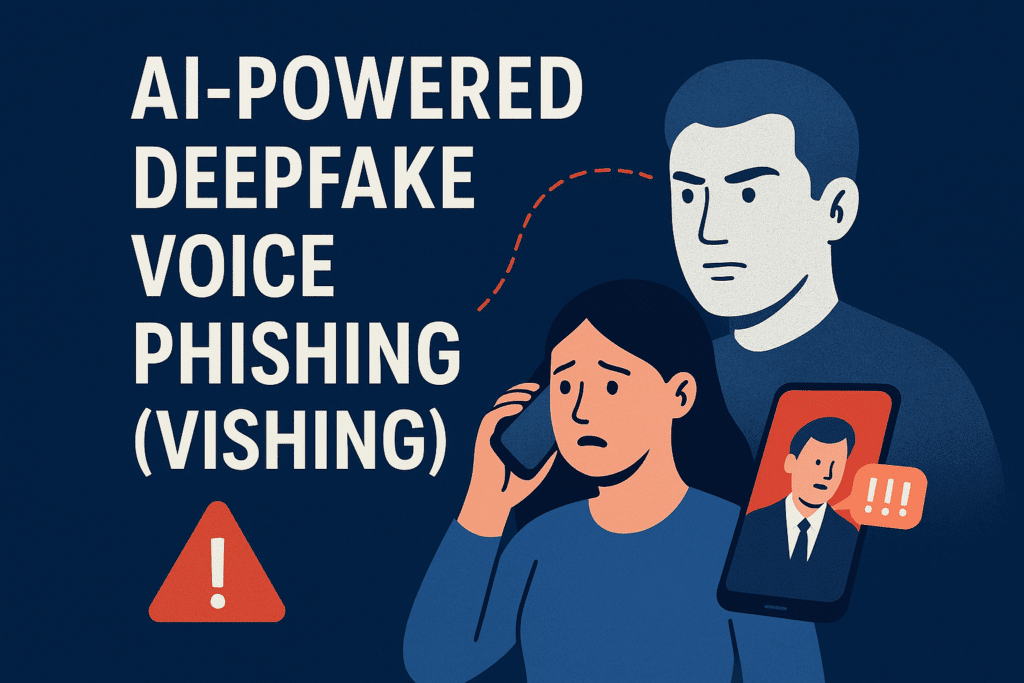
AI-powered deepfake voice phishing

AI-powered deepfake voice phishing — often shortened to deepfake vishing — is a rapidly growing criminal tactic that combines AI voice-cloning with traditional voice social engineering to trick targets into transferring money, revealing credentials, or approving sensitive actions. This guide explains exactly how these scams work, why they are different (and more dangerous) than traditional vishing, real-world impact, and a layered — human + technical — defence playbook you can implement today. Why this matters now (fast-moving threat landscape) Generative AI has slashed the time, cost, and technical barriers to create convincing voice clones. Industry and threat-intelligence reporting show that…

Read More
SS7 protocol vulnerabilities in cellular networks

TL;DR SS7 is a decades-old telecom signaling suite still used for call setup, SMS routing, and roaming. Its original trust-based design and lack of authentication/encryption let attackers intercept SMS (including OTPs), redirect calls, track subscribers, and manipulate routing. Real incidents (e.g., bank fraud in 2017 and major telecom data compromises in 2024) show the danger. Defenses exist — SS7/Diameter firewalls, strict interconnect controls, filtering, encryption overlays, and strong user authentication — but adoption is uneven. Operators must combine technical controls, policy changes, and threat intelligence to reduce risk now. 1. Why SS7 matters (and why the keyword matters) Signaling System…

Read More
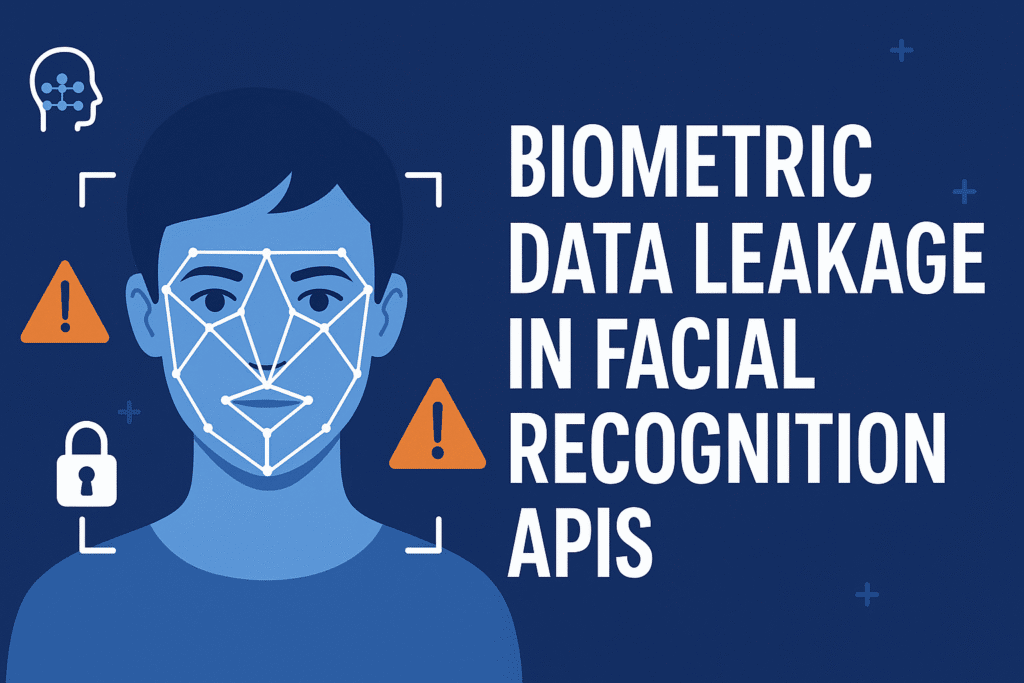
Biometric data leakage in facial recognition APIs

Facial recognition APIs make it easy to add identity, authentication, and analytics features to apps and services. But they also create attractive targets: biometric data (faces, templates) is uniquely identifying, permanent, and — if leaked — far harder to “reset” than a password. This article explains why biometric leaks are especially dangerous, shows real-world examples and regulatory shifts, and gives practical, prioritized guidance for developers, security teams, and product owners integrating facial-recognition APIs. Why biometric leaks are a distinct and high-risk class of breach Biometrics are “who you are,” not “what you know.” Unlike passwords or credit cards, fingerprints and…

Read More

In the world of SaaS, word-of-mouth is no longer just a “nice-to-have”: it is a primary growth engine. A study published in the Harvard Business Review found that referred customers are 18% more likely to remain customers and generate 16% more in profits. For 2026, the landscape has shifted. We did a deep dive into the market, testing the top solutions to find which platforms actually deliver on their promises of lower CAC and higher LTV. We looked for tools that offer frictionless integration, automated payouts, and robust tracking. Quick Answer: What is the best referral marketing software for SaaS…

Read More
Cloud Container Security

Containers and Kubernetes are no longer niche — they’re the backbone of modern cloud-native apps. That speed and portability bring new attack surfaces, however, and defending them requires a focused, lifecycle-wide approach. This article explains what cloud container security is, why it matters today, the biggest risks, and—most importantly—actionable controls, tools, and an audit checklist you can apply now. Quick snapshot: why this matters now Cloud-native adoption continues to climb: organizations reporting “some, much, or nearly all” cloud-native adoption reached a new high in recent CNCF research. That scale means more containers, more images, and more places for attackers to…

Read More
API Security Vulnerabilities

APIs are the plumbing of modern applications — powering mobile apps, microservices, third-party integrations, and AI systems. That ubiquity makes them a highly attractive target: flawed authentication, weak authorization, logic errors and hidden (“shadow”) endpoints routinely enable large-scale breaches, fraud, and service disruption. This article explains the key API security vulnerabilities (with concrete examples), recent data on how common they are, and prioritized, actionable controls you can deploy today. Why API security matters now (short evidence snapshot) • OWASP’s updated API Security Top 10 highlights the specific API risks that show up most often in real breaches — starting with…

Read More
Insider Threat Detection Systems

Introduction In today’s cyber‑threat landscape, organizations face not just external attackers but an equally dangerous enemy: insiders. According to recent data, 83% of organizations reported at least one insider attack in 2024.These “insider threat detection systems” have become indispensable to modern security strategies. But what exactly are they, how do they work, and why are they more important than ever? In this article, we’ll explore the anatomy of insider threat detection systems, examine current trends, present data-backed insights, and offer guidance on selecting and deploying effective solutions. 1. What Are Insider Threat Detection Systems? Insider threat detection systems are specialized…

Read More