Author: Cyber Snowden Editorial Team

The Cyber Snowden Editorial Team researches, writes and reviews guides on cybersecurity threats, tools, frameworks and careers. Every article is checked against official sources such as NIST, CISA and vendor documentation, and updated when standards or products change. Our goal is practical, plain-language security advice for business and IT teams.

Attio vs Affinity vs Dex

Attio, Affinity, and Dex all manage relationships — but for very different audiences. Attio is best for flexible, modern CRM workflows; Affinity excels at automated relationship intelligence for investors; Dex is ideal for individuals managing personal networks. The best tool depends on whether you prioritise scalability, automation, or simplicity. Quick Comparison Table Feature Attio Affinity Dex Best For Startups & SMBs VCs & PE firms Individuals Relationship intelligence Moderate Advanced (AI) Basic Automated data capture Limited Extensive Moderate Customisation High Low Low Mobile-first No No Yes Pricing model Per-user monthly Per-user yearly Freemium Typical cost $29–$119/user/mo $2,000+/user/yr Free → paid…
Read More
Super vs Potion vs Feather

Super, Potion, and Feather all turn Notion into websites — but they serve different goals. Super is best for marketing and branding sites, Potion is best for simple fast launches, and Feather is built specifically for scalable, SEO-driven blogs. If your focus is content growth and publishing, Feather wins; if branding and design matter most, Super is stronger. Quick Comparison Table Feature Super Potion Feather Primary Use Marketing & docs sites Simple websites Blogging & content SEO tools Moderate Basic Advanced Blogging features Limited Very limited Full blogging suite Speed (static) Fast Very fast Very fast Authors & tags No…

Read More
Product Fruits vs Userflow vs Chameleon

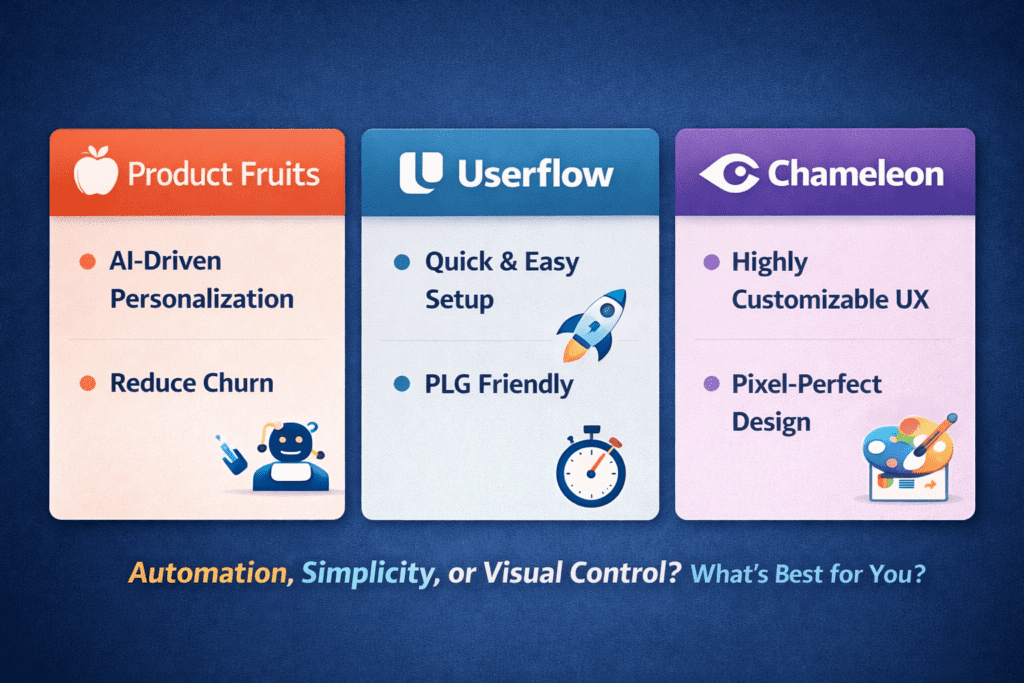
Most SaaS teams should choose Product Fruits for its AI-driven personalization and built-in support that significantly improves activation and reduces churn. Userflow is ideal for teams wanting lightweight, simple onboarding without complexity, while Chameleon is best for design-heavy teams that need pixel-perfect, brand-controlled experiences. Your best choice depends on whether you prioritise automation, simplicity, or visual control. Quick Comparison: Product Fruits vs Userflow vs Chameleon (2025) Tool Core Strength Best For Product Fruits AI-powered personalized onboarding + in-app support SaaS teams focused on activation & retention Userflow Simple, fast onboarding flows PLG startups needing speed and ease Chameleon Highly customizable,…

Read More
Elevate vs Wise vs Paysera

Elevate, Wise, and Paysera all enable international payments, but they serve very different business needs. Wise excels at low-cost cross-border transfers, Paysera is strongest for European SEPA-based businesses, and Elevate is built for freelancers and companies in emerging markets who need USD access, local payouts, and compliance. The best choice depends on where you operate, how you get paid, and whether you need local financial infrastructure in addition to global transfers. Quick Comparison Table Table 1: Elevate vs Wise vs Paysera (2025) Platform Best for Key limitation Elevate South Asian & emerging-market businesses needing USD access + local payouts Newer…

Read More
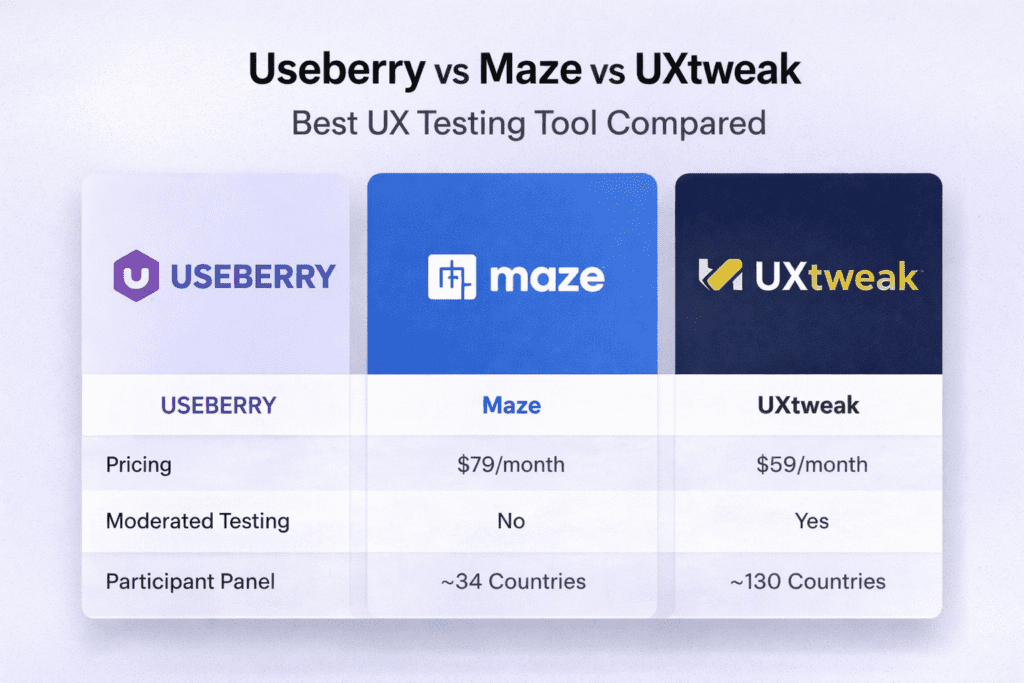
Useberry vs Maze vs UXtweak

Useberry, Maze, and UXtweak are all strong UX testing tools, but they serve different team sizes and research maturity levels. Maze is best for early-stage teams and quick validation, Useberry suits solo researchers and designers, while UXtweak offers the most comprehensive feature set and participant management for growing teams. If you need depth, scalability, and global recruitment, UXtweak currently provides the best overall value. Quick Comparison: Useberry vs Maze vs UXtweak Table 1: Core Platform Comparison (2025) Category Useberry Maze UXtweak Best for Designers & solo researchers Product teams doing rapid testing Research-driven teams & scaling orgs Pricing (entry paid…

Read More
Lemon Squeezy vs Paddle vs Payhere

Lemon Squeezy is best for creators and small SaaS teams who want fast setup and built-in marketing tools. Paddle is strongest for scaling SaaS businesses that need global tax compliance, advanced billing, and analytics. Payhere is ideal for South Asia-focused businesses that want local payments and lower complexity. The right choice depends on whether you prioritise speed, scale, or regional coverage. Comparison Table: Lemon Squeezy vs Paddle vs Payhere Platform Best For Key Differentiator Lemon Squeezy Creators & indie SaaS Built-in storefront + affiliates + email Paddle Scaling & enterprise SaaS Merchant of Record + global tax + analytics Payhere…

Read More
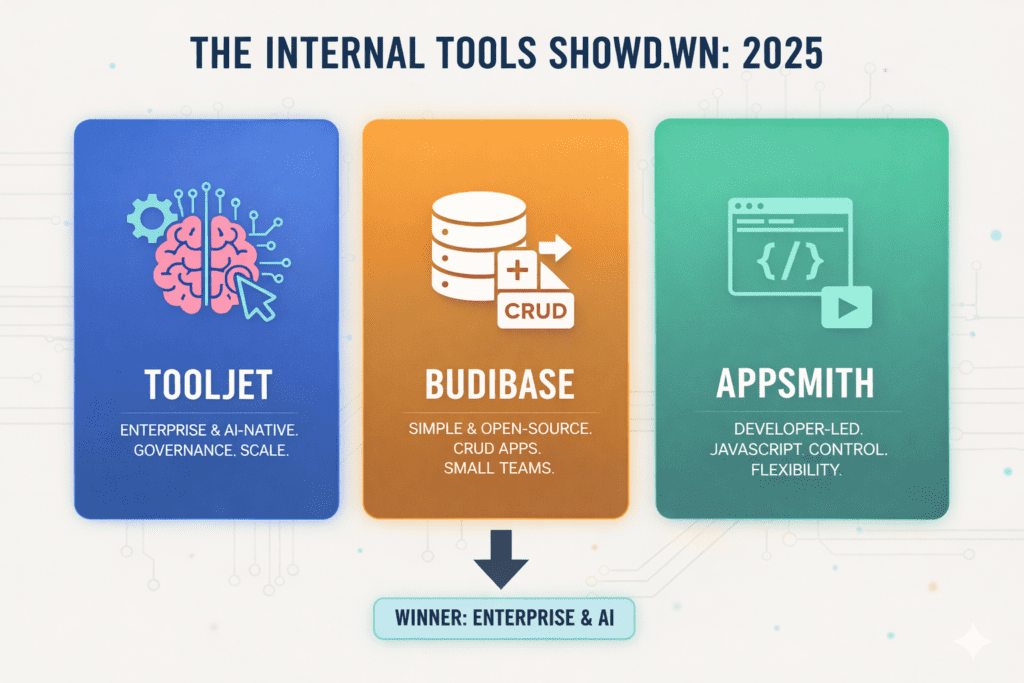
ToolJet vs Budibase vs Appsmith

ToolJet is the best choice for enterprises needing scalability, AI-assisted development, and strong governance. Budibase is ideal for small teams that want a simple, open-source CRUD builder. Appsmith sits in the middle, offering flexibility for developers but lacking enterprise depth. If you want speed without sacrificing control, ToolJet currently wins. Comparison Table: ToolJet vs Budibase vs Appsmith Feature ToolJet Budibase Appsmith Deployment Cloud, self-hosted, on-prem, air-gapped Cloud, self-hosted Cloud, self-hosted Open Source Yes Yes Yes AI-Assisted Building Native AI builder & agents Limited None Enterprise Governance Advanced RBAC, audit logs, SSO Basic RBAC Partial enterprise controls Best For Enterprises &…

Read More
Akiflow vs Sunsama vs Morgen

Akiflow is best for power users who want automation and deep integrations, Sunsama is ideal for mindful daily planning with structure, and Morgen suits calendar-first users who want strong scheduling and AI assistance. Your best choice depends on whether you prioritise workflow automation (Akiflow), intentional focus (Sunsama), or advanced scheduling (Morgen). For complex, multi-tool workflows, Akiflow leads; for personal balance, Sunsama shines; for calendar control, Morgen stands out. Comparison Table (early placement) Feature Focus Akiflow Sunsama Core Strength Automation + integrations Mindful daily planning Time Blocking Yes (manual + smart suggestions) Yes (manual, guided) Best For Power users & teams…

Read More
Mangools vs Serpstat vs SE Ranking

Mangools is best for beginners and small sites that want simple, affordable SEO. Serpstat is ideal for data-heavy users who want competitor and market intelligence. SE Ranking offers the best balance for agencies and growing teams with strong rank tracking, reporting, and pricing flexibility. If you want ease of use → Mangools, deep data → Serpstat, agency workflows → SE Ranking. Comparison Table Feature Mangools Serpstat SE Ranking Starting price $49/mo $55/mo $31/mo Rank tracking Yes (SERPWatcher) Yes Yes Competitor research Basic Advanced Advanced White-label reporting Limited No Yes Best for Beginners Data-driven teams Agencies & SMBs Interpretation:Mangools focuses on…

Read More
Instantly vs Smartlead vs Mailforge

Instantly, Smartlead, and Mailforge solve very different problems in cold email. Instantly is best for high-volume sending, Smartlead excels at deliverability-first automation, while Mailforge is not a sender at all—it’s cold email infrastructure. The “best” tool depends on whether you need sending, automation, or rock-solid inbox placement. Comparison Table: Instantly vs Smartlead vs Mailforge (2025) Feature Instantly Smartlead Mailforge Core Purpose Cold email sending & scaling Deliverability-focused outreach Cold email infrastructure Email Warm-up Included (basic) Unlimited, AI-driven External (use with sender) Inbox Rotation Yes Yes N/A Sequencing & Automation Yes Advanced workflows No Domains & Mailboxes Bring your own Bring…

Read More