

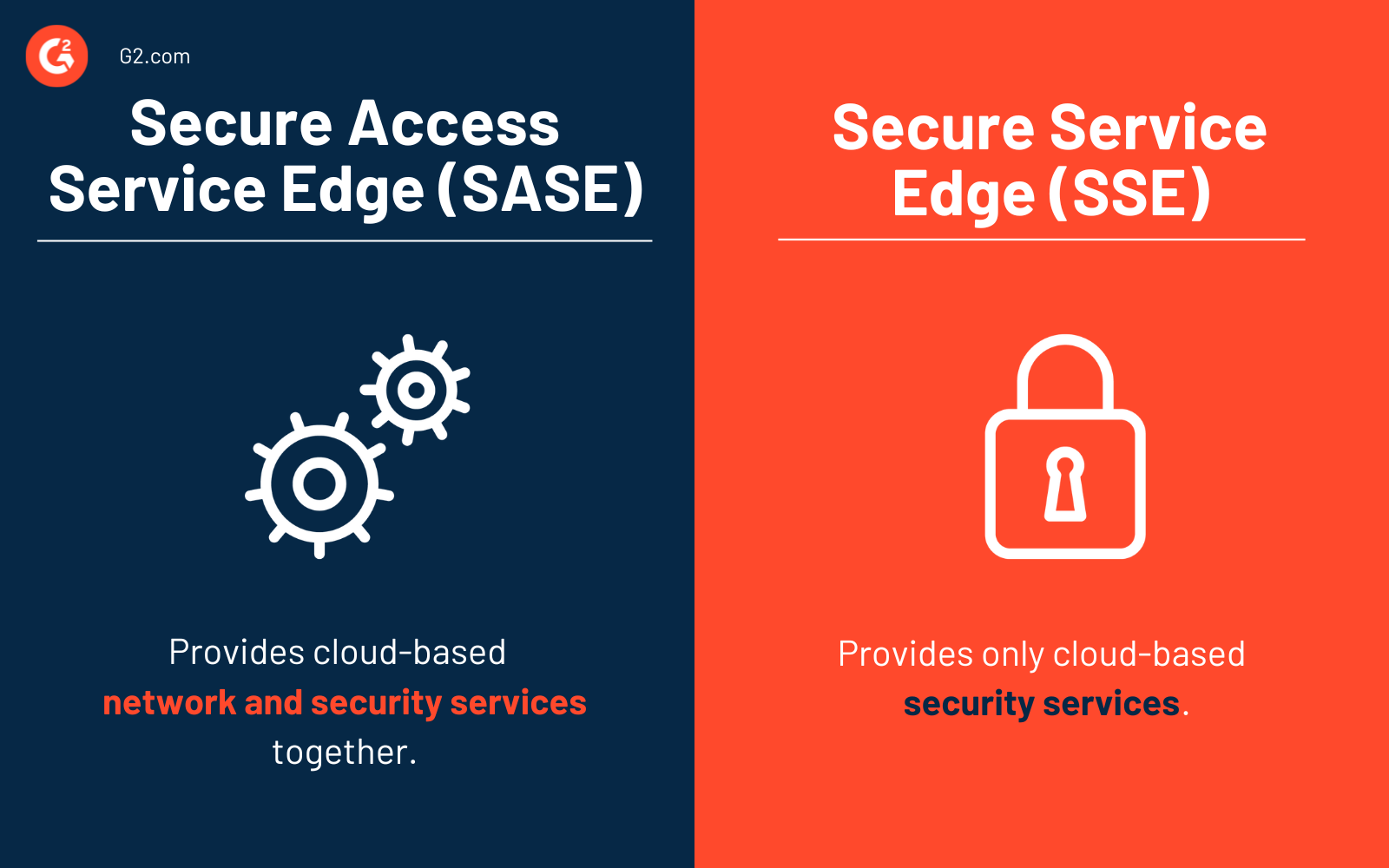
The shift to cloud-first operations and hybrid workforces has blurred traditional network security boundaries. Enter Secure Access Service Edge (SASE) and Security Service Edge (SSE)—two frameworks revolutionizing how organizations secure distributed environments. Yet, confusion persists: Is SSE just a subset of SASE? When do you need one over the other? This article demystifies both models, their use cases, and how they align with SD-WAN integration, network-as-a-service (NaaS), and hybrid workforce demands.
Defining SASE and SSE
What is SASE?
Secure Access Service Edge (SASE) combines networking and security into a unified, cloud-delivered service. Defined by Gartner in 2019, SASE merges SD-WAN with cloud-native security functions like:
- Zero Trust Network Access (ZTNA)
- Secure Web Gateway (SWG)
- Cloud Access Security Broker (CASB)
- Firewall-as-a-Service (FWaaS)
SASE optimizes both performance and security, ideal for organizations with distributed users and cloud workloads.
What is SSE?
Security Service Edge (SSE), a subset of SASE, focuses exclusively on security services (SWG, CASB, ZTNA) without SD-WAN. Gartner introduced SSE in 2021 to address enterprises needing cloud security without network overhaul.
Head-to-Head Comparison
| Feature | SASE | SSE |
| Scope | Networking + Security | Security only |
| SD-WAN Integration | Native | Requires third-party SD-WAN |
| Use Case | Global enterprises needing performance + security | Companies with existing SD-WAN prioritizing cloud security |
| Key Vendors | Cato Networks, Palo Alto Prisma | Netskope, Zscaler, Broadcom |
When to Choose SASE
- You Need Network Optimization + Security: SASE’s built-in SD-WAN enhances performance for global offices and remote workers.
- Example: A retail chain with 500+ locations uses Cato Networks to reduce latency while enforcing ZTNA.
- Legacy MPLS Replacement: Combines SD-WAN cost savings with cloud security.
- The SASE market is projected to hit $36.7B by 2028 (MarketsandMarkets, 2023).
- Unified Management: Single console for network and security policies simplifies operations.
When SSE Makes Sense
- Existing SD-WAN Investments: Pair SSE (e.g., Zscaler) with your current SD-WAN (e.g., Cisco Viptela) to avoid redundancy.
- Cloud-Centric Workloads: SSE secures SaaS apps (Microsoft 365, Salesforce) and remote users without network changes.
- Regulatory Compliance: Netskope’s SSE offers granular data loss prevention (DLP) for industries like healthcare.
Integration with SD-WAN and NaaS
- SASE: Embeds SD-WAN, making it a true network-as-a-service (NaaS) solution.
- SSE: Requires third-party SD-WAN but excels in NaaS environments via API-driven security.
Case Study: A financial firm uses Palo Alto Prisma SASE to replace MPLS, cutting costs by 40% while securing 10,000 remote workers.
Hybrid Workforce Security: SASE vs. SSE
- SASE: Secures users and optimizes traffic.
- Example: FWaaS blocks threats while SD-WAN prioritizes video conferencing.
- SSE: Focuses on securing access to apps.
- Example: Zscaler’s SWG filters malicious sites for home users.
Pitfalls to Avoid
- Overbuying: Don’t choose SASE if you only need SSE’s security features.
- Vendor Lock-In: Ensure interoperability between SSE and existing SD-WAN.
- Neglecting Visibility: Both models require real-time monitoring for SaaS and endpoints.
Best Practices
- Assess Current Infrastructure: Audit SD-WAN, firewalls, and cloud apps.
- Start with SSE for Cloud Security: Migrate to SASE later if network upgrades are needed.
- Prioritize ZTNA: Enforce least-privilege access, a core tenet of both frameworks.
Future Trends
- AI-Driven SASE: Platforms like Versa Networks use ML to predict traffic bottlenecks.
- Convergence with SASE 2.0: Deeper integration with IoT/OT security and 5G.
Conclusion
SASE is ideal for organizations needing integrated networking and security, while SSE suits those prioritizing cloud security without SD-WAN changes. Evaluate your hybrid workforce needs, existing infrastructure, and long-term goals to decide. Pilot SSE for quick wins, then scale toward SASE as needed.
Data Sources
- Gartner, Hype Cycle for Network Security, 2023
- MarketsandMarkets, SASE Market Forecast Report 2023
- Palo Alto Networks, 2023 Cloud Security Report
- Zscaler, SSE Adoption Trends Survey 2023
- MITRE, Evaluating ZTNA Frameworks
