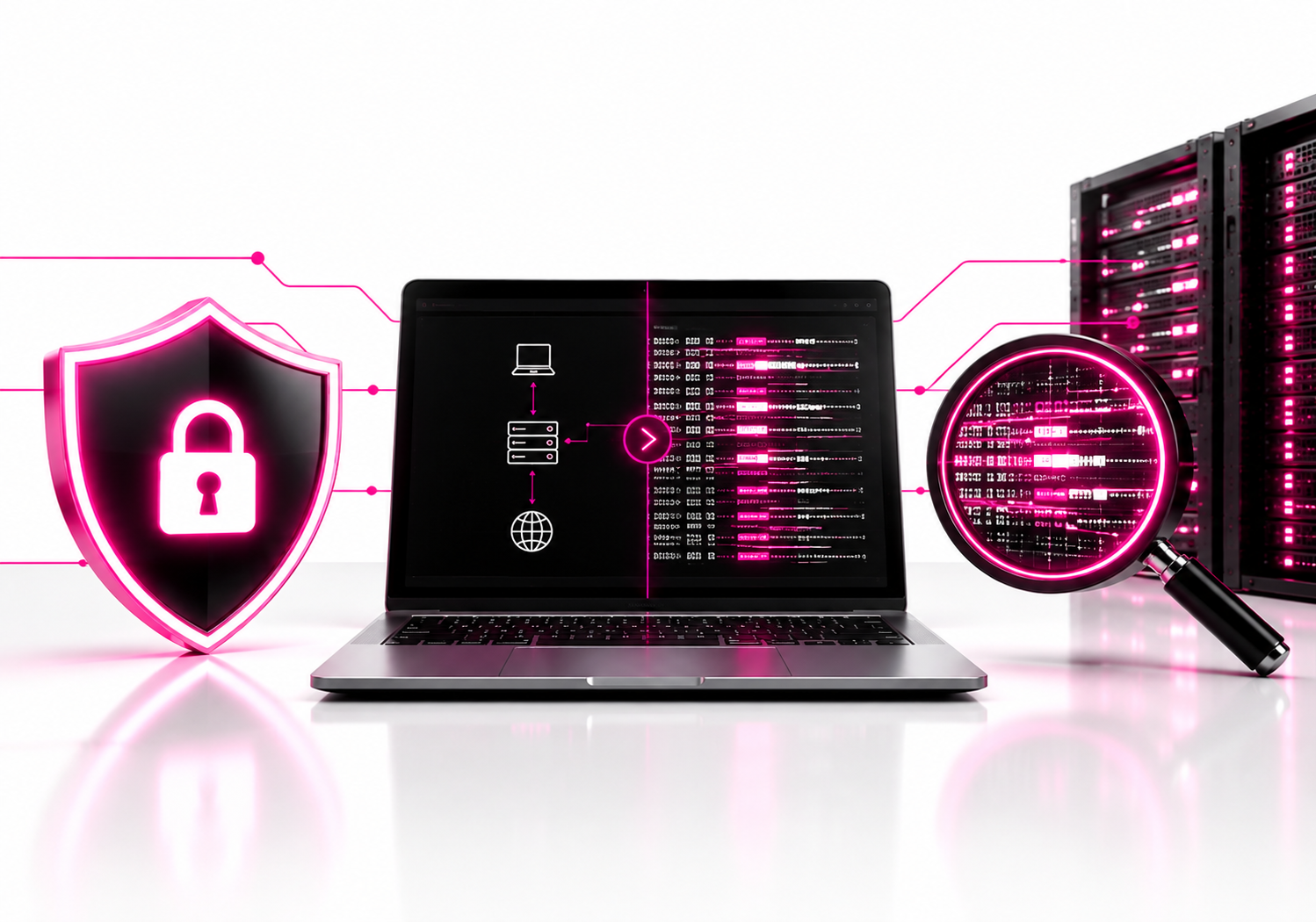
Packet filtering checks network traffic primarily against packet headers such as source/destination IP addresses, protocols, and ports, while deep packet inspection (DPI) examines deeper protocol or payload information. Packet filtering is typically faster and simpler; DPI provides more granular visibility and control but requires more processing and can be limited by encrypted traffic.
The distinction matters when designing firewalls, network segmentation, and security monitoring. A basic ACL might block inbound TCP traffic to port 23, while a DPI-capable security device can inspect application-layer characteristics and potentially identify traffic patterns that a simple header-based rule cannot see.
NIST describes firewalls as mechanisms for controlling network traffic between systems with different security postures and distinguishes packet filtering, stateful inspection, and deeper inspection capabilities. CISA also recommends combining network segmentation, router ACLs, stateful inspection, and firewall capabilities as part of defense in depth.
What is packet filtering?
Packet filtering allows or blocks traffic according to information available in packet headers, such as IP addresses, protocols, and port numbers. It is a fundamental firewall technique and is particularly useful when you need predictable, high-speed access-control rules.
A basic packet-filtering rule might look conceptually like:
ALLOW TCP
SOURCE: 10.10.20.0/24
DESTINATION: 10.10.30.10
DESTINATION PORT: 443
The firewall does not necessarily need to understand what the HTTPS application is doing. It can make its decision from the network and transport information available to it.
The IETF describes stateless packet filtering as blocking according to characteristics such as network-layer addresses, protocols, or ports.
Typical packet-filtering criteria include:
- Source IP address
- Destination IP address
- Source port
- Destination port
- IP protocol
- Interface or network zone
- Direction of traffic
- Sometimes packet flags or other header fields
What is stateful packet filtering?
Stateful inspection extends packet filtering by tracking active connections. Instead of treating every packet as an independent event, the firewall maintains connection state and can reject packets that do not belong to an expected flow.
NIST defines stateful inspection as packet filtering that tracks connection state and blocks packets that deviate from the expected state.
For example, a firewall may allow an internal workstation to establish an outbound TCP connection. When response traffic returns, the firewall can determine whether it belongs to that established connection rather than simply allowing arbitrary inbound traffic to the workstation.
That is a major improvement over simplistic stateless filtering, but it is still different from DPI.
What is deep packet inspection?
Deep packet inspection examines more than basic packet-header information and can inspect protocol or payload content to make more granular filtering decisions. Depending on the product and traffic type, DPI can support application identification, content inspection, protocol validation, threat detection, and policy enforcement.
NIST’s enterprise-network guidance describes DPI as examining packet content, including headers and payloads, rather than relying only on packet-header information.
The IETF similarly describes DPI as filtering or blocking based on the content carried by packets and notes that application-layer characteristics can provide more granular filtering than lower-layer rules.
For example, a traditional packet filter might see:
Destination IP: 203.0.113.50
Destination port: 443
Protocol: TCP
A DPI-capable security device may be able to identify additional characteristics of the application traffic, depending on the protocol, inspection method, and whether the traffic is encrypted.
That difference is the heart of packet filtering vs deep packet inspection.
Packet filtering vs deep packet inspection: What is the difference?
The simplest distinction is headers versus deeper protocol or content information.
| Feature | Packet Filtering | Deep Packet Inspection |
|---|---|---|
| Primary visibility | Packet headers | Headers plus deeper protocol/content data |
| Typical use | Access control and segmentation | Application-aware filtering and threat inspection |
| Processing overhead | Lower | Higher |
| Rule granularity | Lower | Higher |
Packet filtering is generally the better fit when your requirement is straightforward network access control. DPI becomes useful when the security policy needs information that cannot be determined reliably from IP addresses and ports alone.
NIST’s firewall guidance describes different firewall technologies according to their security capabilities and trade-offs rather than treating one inspection method as appropriate for every environment.
Is deep packet inspection better than packet filtering?
DPI provides deeper visibility, but it is not a replacement for basic packet filtering. In a properly designed network, packet filtering and stateful controls often provide the foundation, while deeper inspection adds application-aware security where it provides enough value to justify its processing and operational cost.
Consider a public web server in a DMZ. You may first restrict access using network-level rules:
Internet → TCP 443 → Web Server
Internet → TCP 22  → DENY
That establishes a simple boundary.
A deeper inspection layer can then examine permitted application traffic for characteristics that basic ACLs cannot evaluate.
This layered model aligns with CISA guidance recommending network segmentation and controls including router ACLs, stateful packet inspection, firewalls, and DMZs as part of defense in depth.
The mistake is assuming that installing DPI means you no longer need carefully designed access-control rules.
You still do.
Does packet filtering inspect application data?
Usually, no. Traditional packet filtering makes decisions using information in packet headers rather than interpreting the application’s payload.
For example, a rule that blocks:
TCP → destination port 23does not need to understand the application data being transmitted. It simply rejects traffic matching the rule.
CISA describes packet filtering as controlling traffic using information such as MAC addresses, IP addresses, and, in some cases, transport-layer port numbers.
There are exceptions in modern firewall products. Many platforms combine multiple technologies, so a device marketed as a firewall may provide packet filtering, stateful inspection, application identification, IPS, web filtering, and other capabilities simultaneously.
For that reason, “firewall” and “packet filter” should not be treated as interchangeable terms when evaluating a modern security appliance.
Can deep packet inspection detect threats that packet filtering misses?
Yes, when the relevant threat information exists in traffic that the inspection system can actually see. DPI can evaluate application-layer characteristics that a simple IP-and-port rule cannot evaluate.
CISA’s high-value-asset guidance describes boundary protection that can use firewall packet-header filtering alongside deep packet inspection for malicious activity within packet payloads.
Consider two connections:
Connection A
Source: Internal host
Destination: External server
Port: 443
and:
Connection B
Source: Internal host
Destination: External server
Port: 443
A basic packet filter may treat them similarly because both use HTTPS.
A deeper security system may have additional information available to distinguish the applications or content involved, depending on the inspection technology and encryption visibility.
That does not mean DPI automatically detects every malicious connection. Detection quality depends on signatures, protocol parsers, behavioral analysis, policy, threat intelligence, visibility, and the specific product.
Does DPI work with encrypted HTTPS traffic?
Encrypted traffic is one of the biggest limitations of deep packet inspection. If the payload is protected by TLS and the inspection device cannot decrypt or otherwise obtain meaningful application-layer visibility, it cannot simply read the encrypted contents.
The IETF specifically identifies HTTPS as a challenge for filtering systems because requested URI information can be carried inside the encrypted channel. It describes approaches involving trusted certificates when systems need to inspect traffic inside the encrypted connection.
In practice, organizations can use different approaches depending on architecture and policy:
- Inspect only visible metadata.
- Use TLS inspection where authorized and appropriate.
- Deploy endpoint security to inspect traffic at the endpoint.
- Use DNS, IP, and domain reputation controls.
- Use network telemetry and behavioral detection.
- Combine network controls with application and identity signals.
TLS inspection also creates significant operational and privacy considerations. It can require certificate deployment, exception handling, compatibility testing, and careful treatment of sensitive traffic.
A financial-services application, healthcare portal, or personal banking connection may need different inspection treatment from ordinary corporate web traffic.
Does packet filtering have better performance than DPI?
Packet filtering generally requires less processing than deep inspection because it can make decisions using comparatively limited packet information. DPI performs more analysis, which can increase processing requirements and may affect throughput depending on the device, traffic mix, enabled security features, and implementation.
NIST’s older firewall guidance notes that packet-filter firewalls are particularly suitable for high-speed environments where more advanced capabilities are unnecessary.
But don’t interpret that as “DPI is always slow.”
Modern security appliances can perform substantial inspection at high throughput using specialized hardware and optimized software. The actual performance impact depends heavily on what is enabled.
For example, these are very different workloads:
Firewall ACL
↓
IP + port decision
versus:
Firewall
↓
Application identification
↓
Protocol parsing
↓
TLS inspection
↓
Content inspection
↓
IPS rules
↓
Malware analysis
The second pipeline naturally requires more resources.
When comparing products, look at throughput with the exact security features enabled, not just the vendor’s headline firewall throughput.
When should you use packet filtering?
Use packet filtering when the primary requirement is network access control, segmentation, or simple traffic restriction.
Common examples include:
- Restricting management interfaces.
- Blocking unused ports.
- Separating production and development networks.
- Controlling traffic between VLANs.
- Restricting server-to-server communication.
- Creating DMZ boundaries.
- Limiting administrative access to specific source networks.
A simple rule such as:
ALLOW 10.20.0.0/16 → 10.30.10.20:443/TCP
DENY  ANY          → 10.30.10.20:*
can be easier to understand, audit, and troubleshoot than a complicated application-inspection policy.
For segmentation, simple controls are often exactly what you want.
When should you use deep packet inspection?
Use DPI when your security requirement depends on application behavior, protocol content, or payload characteristics that basic firewall rules cannot evaluate.
DPI is particularly relevant for:
- Application-aware firewalls
- Intrusion prevention systems
- Web filtering
- Malware detection
- Protocol anomaly detection
- Data-loss prevention
- Content-aware network policies
- Some industrial and OT security controls
The IETF notes that application-layer inspection can provide more granular filtering and potentially reduce collateral blocking compared with broad lower-layer filtering.
The trade-off is complexity. The more deeply a security device understands traffic, the more carefully you need to manage inspection policies, exceptions, performance, encrypted traffic, certificates, and false positives.
How should you deploy packet filtering and DPI together?
A practical deployment starts with least-privilege network access rules, then adds deeper inspection where it addresses a specific security requirement.
1. Define network zones
Separate important environments such as:
Internet
   ↓
DMZ
   ↓
Application
   ↓
Database
Do not rely on DPI as a substitute for segmentation.
2. Establish basic firewall rules
Define which networks and services are actually required.
For example:
Internet → Web DMZ: TCP 443
Web DMZ → App Tier: TCP 8443
App Tier → Database: TCP 5432
Everything else: Deny
The exact ports should match the applications you actually operate.
3. Add stateful inspection
Track connection state so return traffic belongs to legitimate sessions.
NIST identifies stateful inspection as an extension of packet filtering that maintains connection information and checks packets against expected connection state.
4. Add DPI selectively
Apply deeper inspection to traffic where the additional visibility has a clear security benefit.
Don’t automatically inspect everything simply because the feature exists.
5. Test encrypted-traffic behavior
Document which traffic can be decrypted, which traffic cannot, and which categories must be excluded.
6. Monitor denied traffic
CISA specifically recommends logging denied traffic and using strong network segmentation as part of a broader defensive strategy.
Review the logs periodically. A firewall rule that looked reasonable during deployment can become obsolete as applications and network architecture change.
What are the main advantages and disadvantages?
| Technology | Main advantages | Main limitations |
|---|---|---|
| Packet filtering | Fast, simple, predictable | Limited application visibility |
| Stateful inspection | Tracks legitimate connections | Still limited compared with payload inspection |
| DPI | Granular application/content visibility | More processing, complexity, and encryption challenges |
There is no reason to frame this as an either-or decision in most enterprise networks.
A modern security architecture can use all three layers.
Packet filtering establishes where traffic is allowed to go. Stateful inspection establishes whether packets belong to legitimate connections. DPI can provide additional context about what the traffic is doing.
Packet filtering vs deep packet inspection: Which should you choose?
Choose packet filtering when your primary need is fast, predictable network-level access control. Choose deep packet inspection when you need application or content visibility that cannot be obtained from packet headers alone.
For most enterprise environments, the better architecture is layered rather than choosing one technology. Start with segmentation and restrictive firewall rules, add stateful inspection, and then deploy DPI or related application-aware controls where the additional visibility solves a defined security problem.
The next step is to map your network flows before changing firewall technology. Identify who communicates with whom, over which protocols and ports, and which traffic actually requires application-level inspection. That produces a cleaner policy than starting with a product’s feature list.
Related reading: SSL inspection vs TLS offloading and stateful vs stateless firewalls. Browse all our cybersecurity comparisons.
FAQ: Packet Filtering vs Deep Packet Inspection
What is the main difference between packet filtering and DPI?
Packet filtering primarily evaluates packet-header information such as IP addresses, protocols, and ports. Deep packet inspection can examine deeper protocol information and, where visibility is available, payload content. DPI therefore supports more granular application-aware decisions but generally requires more processing and introduces additional operational complexity.
Is packet filtering faster than deep packet inspection?
Generally, yes. Basic packet filtering can make decisions using a relatively small amount of packet information, while DPI performs deeper analysis. Actual throughput depends on hardware, software, traffic characteristics, and enabled features, so vendor performance claims should be compared using equivalent security configurations.
Can DPI inspect HTTPS traffic?
Not automatically. TLS encrypts application data, limiting what a network device can see without an appropriate inspection mechanism. Organizations can use TLS inspection where technically and legally appropriate, but it introduces certificate management, privacy, compatibility, and performance considerations. The IETF specifically identifies encrypted HTTPS as a challenge for content filtering.
Is stateful inspection the same as deep packet inspection?
No. Stateful inspection tracks the state of network connections and checks whether packets belong to expected flows. DPI goes deeper by examining protocol or content information. A modern firewall may provide both capabilities, but they solve different problems.
Does deep packet inspection replace a firewall?
No. DPI is an inspection capability, not a substitute for sound network architecture. Firewalls still need explicit access-control policies, segmentation, state tracking, logging, and appropriate default-deny rules. DPI works best as an additional layer when application or content visibility is required.
Which is better for network security: packet filtering or DPI?
They provide different layers of control. Packet filtering is fundamental for network segmentation and access control, while DPI adds deeper application visibility. A defense-in-depth architecture can use packet filtering, stateful inspection, DPI, endpoint security, logging, and other controls together rather than relying on one mechanism.