Author: Ali

Ali is a SaaS growth marketer and founder of Rapid North, helping SaaS companies grow through performance marketing, SEO, AI visibility, and data-driven growth strategies. With 8+ years of experience in SaaS and digital marketing, he works with founders and teams to generate more qualified traffic, leads, and customers.

Secure Data Transfer Between Locks

Symmetric encryption uses one secret key for encryption and decryption, while asymmetric encryption uses a related public-private key pair. Symmetric encryption is generally used for efficiently protecting large amounts of data, while asymmetric cryptography solves problems such as secure key establishment and digital signatures. Modern systems commonly combine both rather than choosing only one. That distinction sounds simple, but it explains a huge part of how modern security systems work. AES is a common symmetric encryption algorithm, while RSA and elliptic-curve cryptography are examples of asymmetric cryptography. The two approaches have different performance characteristics, key-management requirements, and use cases. For…

Read More
Neon Malware Analysis Workstation

STRIDE and PASTA solve different threat-modeling problems. STRIDE is a threat categorization approach that systematically asks what can go wrong across system components, while PASTA is a seven-stage, risk-centric methodology that connects business objectives, attacker behavior, vulnerabilities, and business impact. STRIDE is often easier to integrate into development workflows; PASTA provides deeper risk context. Neither method replaces threat modeling fundamentals such as understanding the architecture, identifying trust boundaries, analyzing threats, selecting mitigations, and reviewing the model as the system changes. OWASP recommends treating threat modeling as an ongoing part of the software development lifecycle rather than a one-time exercise. The…

Read More
Neon Malware Analysis Lab

Static malware analysis examines a suspicious file without executing it, while dynamic malware analysis observes what the malware does when it runs in a controlled environment. Static analysis is useful for quickly understanding code, strings, metadata, and structure; dynamic analysis reveals runtime behavior such as processes, files, registry changes, and network activity. In practice, security teams often combine both. The difference matters because malware authors actively try to frustrate analysis. Packed binaries, obfuscation, stripped symbols, encrypted strings, environment checks, and delayed execution can hide important functionality from a purely static inspection. MITRE ATT&CK documents techniques such as dynamic API resolution…

Read More
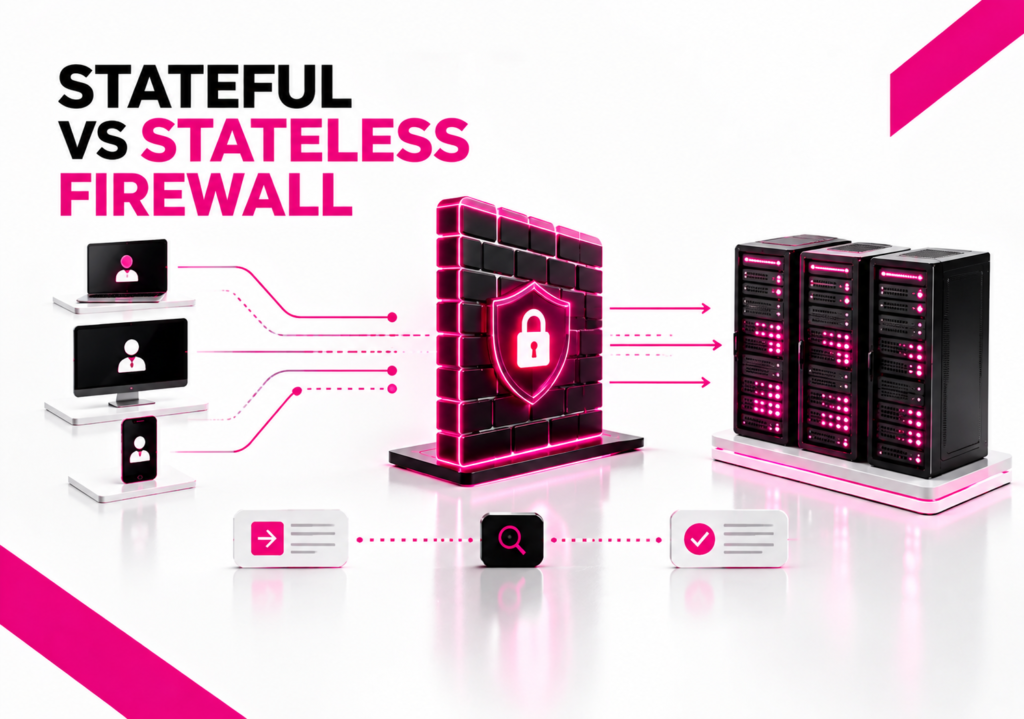
Stateful vs Stateless Firewall Network

A stateful firewall tracks active connections and evaluates packets in the context of those connections, while a stateless firewall evaluates each packet independently against predefined rules. Stateful firewalls provide richer traffic awareness and simpler handling of return traffic; stateless firewalls are simpler, predictable, and often useful for high-speed filtering and straightforward access-control rules. The difference comes down to context. A stateless firewall sees a packet and asks whether its source, destination, protocol, port, or other attributes match a rule. A stateful firewall also considers whether that packet belongs to an existing connection and whether its behavior matches the expected state…

Read More
Neon Cybersecurity Network Flow

SSL inspection and TLS offloading both decrypt TLS traffic, but they solve different problems. TLS offloading moves certificate handling and encryption/decryption away from backend servers, while SSL/TLS inspection deliberately decrypts traffic so a security control can examine it before forwarding it. In many architectures, inspection and offloading can exist together rather than being competing technologies. TLS terminology can get confusing because vendors use terms such as SSL inspection, TLS inspection, SSL termination, TLS termination, and SSL offloading somewhat differently. The practical distinction is straightforward once you look at what happens to the encrypted connection and why it is being decrypted.…

Read More
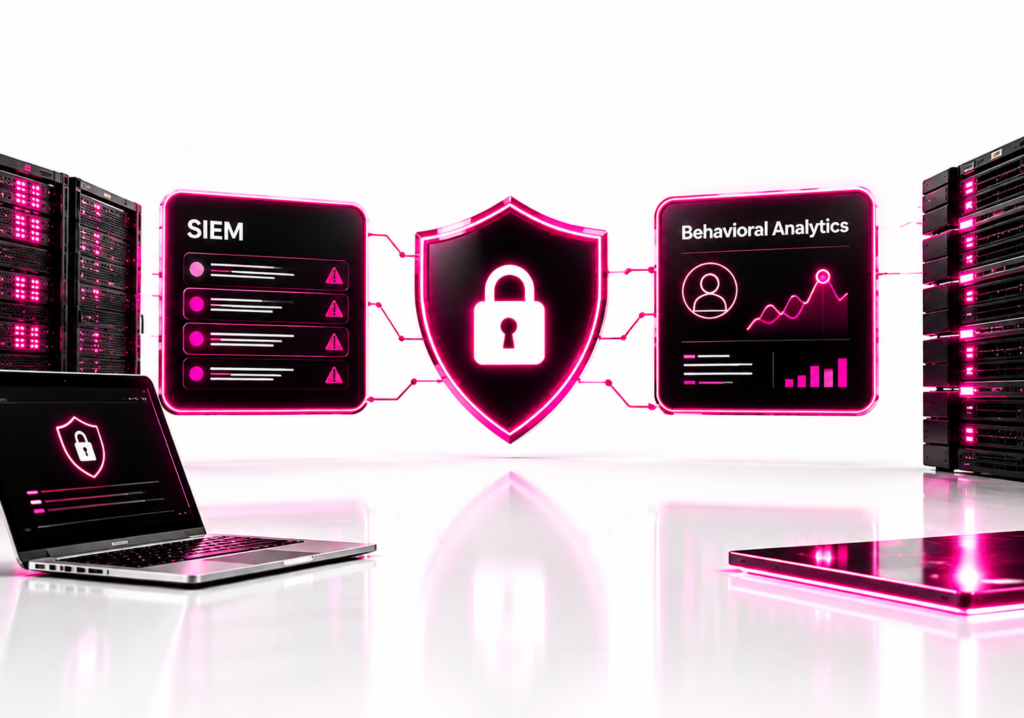
Neon Cybersecurity Shield Dashboard

SIEM correlation rules detect known combinations of security events using explicit conditions, while behavioral analytics looks for activity that deviates from established patterns or expected behavior. Correlation is predictable and explainable; behavioral analytics is better suited to detecting unusual activity that may not match a predefined rule. In practice, mature SOCs use both approaches together. The distinction matters because attackers do not always generate a single obvious alert. A compromised account might authenticate normally, access a new system, execute commands, and transfer an unusual amount of data. Individual events can look harmless while their sequence tells a different story. Traditional…

Read More
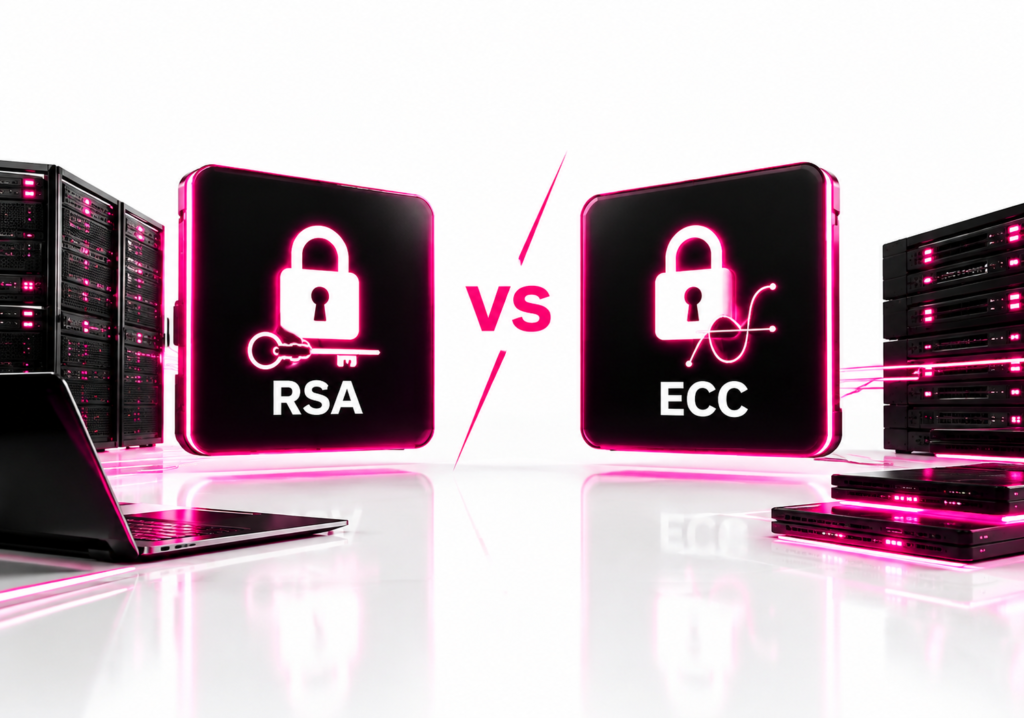
RSA vs ECC: Neon Crypto Showdown

RSA and elliptic curve cryptography (ECC) both provide public-key cryptography, but they rely on different mathematical problems and use very different key sizes. ECC achieves comparable classical security with much smaller keys, which can reduce bandwidth and storage overhead. RSA remains widely supported and standardized, while ECC is commonly used for modern key exchange and digital signatures. The choice becomes more nuanced when you look beyond key length. RSA supports encryption and digital signatures through standardized schemes such as RSA-OAEP and RSA-PSS, while ECC is a family of techniques that includes ECDH for key establishment and ECDSA or EdDSA for…

Read More
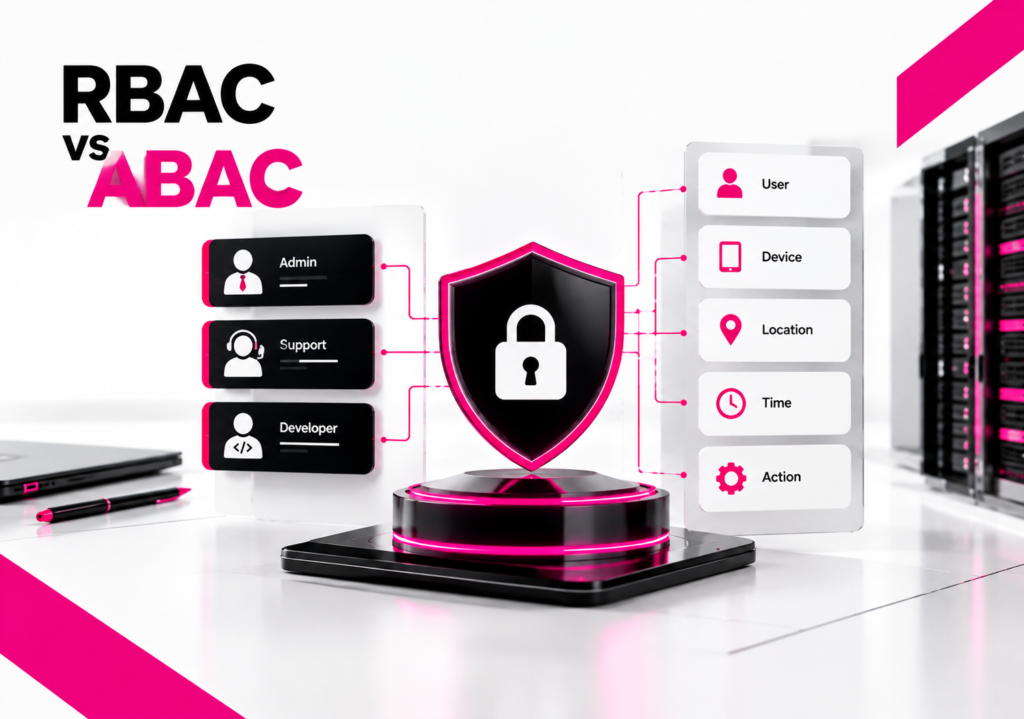
RBAC vs ABAC Security Shield

Role-based access control (RBAC) grants permissions through predefined roles, while attribute-based access control (ABAC) evaluates attributes about the user, resource, action, and environment against policies. RBAC is usually simpler to administer, while ABAC provides finer-grained decisions for dynamic environments. Many organizations can use RBAC for baseline permissions and ABAC rules for context-sensitive access. Access control becomes difficult when an organization has hundreds of applications, thousands of users, cloud resources, contractors, devices, and constantly changing business conditions. The basic question is no longer simply “Who is this user?” It becomes “Should this specific request be allowed right now?” That distinction explains…

Read More
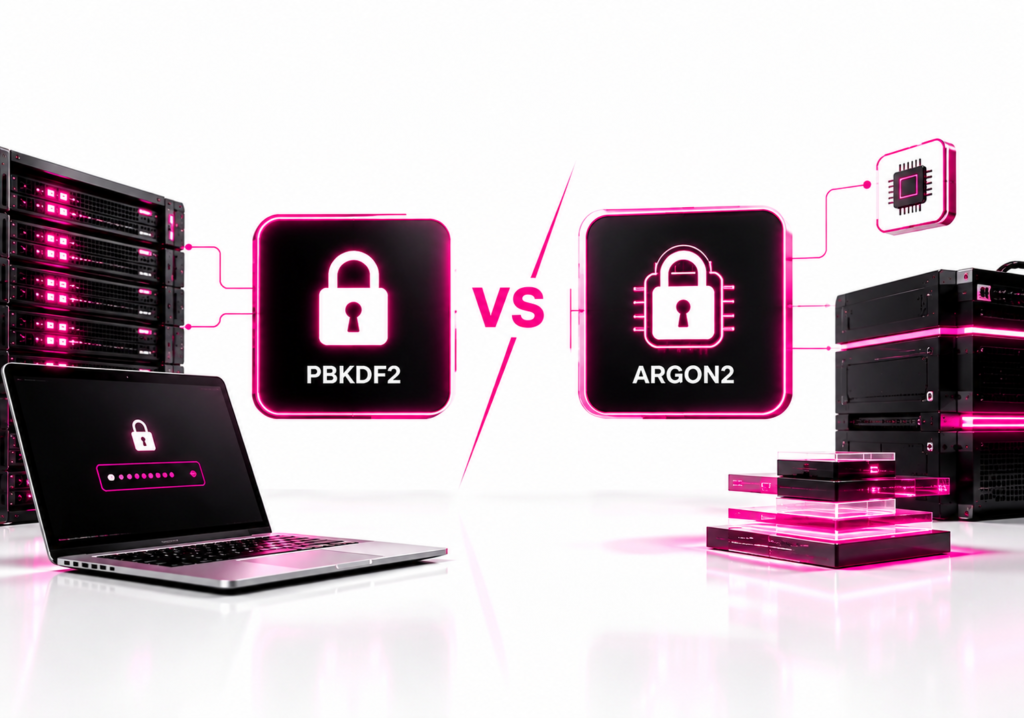
PBKDF2 vs ARGON2 Security Showdown

Argon2id is generally the stronger default for new password-storage systems because it is memory-hard as well as computationally expensive. PBKDF2 remains a strong, standardized option, particularly when FIPS-related requirements or existing platform support make it practical. The right choice depends on your compliance requirements, available server resources, and migration constraints. Password hashing is designed for a very specific situation: an attacker obtains your password database and starts guessing passwords offline. A good password-hashing function makes every guess expensive enough to slow that attack dramatically. It does not encrypt passwords, and it cannot compensate for weak passwords, phishing, credential theft, or…

Read More
Neon Cybersecurity Network Analysis

Packet filtering checks network traffic primarily against packet headers such as source/destination IP addresses, protocols, and ports, while deep packet inspection (DPI) examines deeper protocol or payload information. Packet filtering is typically faster and simpler; DPI provides more granular visibility and control but requires more processing and can be limited by encrypted traffic. The distinction matters when designing firewalls, network segmentation, and security monitoring. A basic ACL might block inbound TCP traffic to port 23, while a DPI-capable security device can inspect application-layer characteristics and potentially identify traffic patterns that a simple header-based rule cannot see. NIST describes firewalls as…

Read More