Author: Ali

Ali is a SaaS growth marketer and founder of Rapid North, helping SaaS companies grow through performance marketing, SEO, AI visibility, and data-driven growth strategies. With 8+ years of experience in SaaS and digital marketing, he works with founders and teams to generate more qualified traffic, leads, and customers.

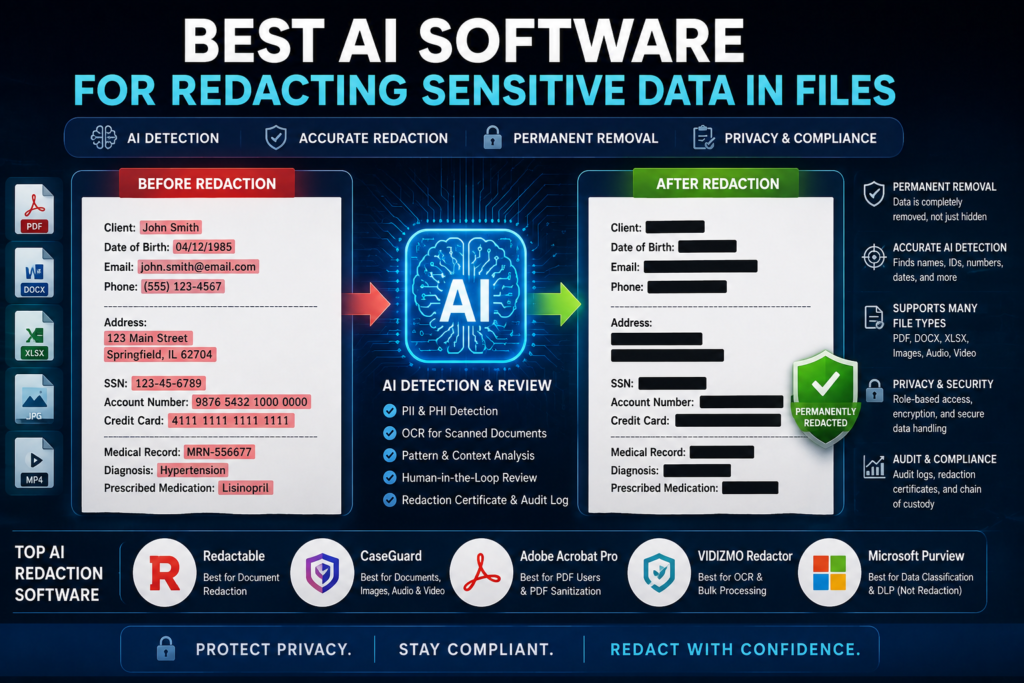
AI Redaction Software Infographic

The best AI software for redacting sensitive data in files depends on what you are protecting. For PDF and document-heavy workflows, Redactable is one of the strongest dedicated options. CaseGuard is better for organizations handling documents, images, audio, and video, while Adobe Acrobat is the practical choice for PDF users who want AI-assisted redaction plus reliable PDF sanitization. AI redaction has changed the workflow from manually searching thousands of pages for names, addresses, account numbers, and other PII to having software identify likely sensitive information automatically. But there is a catch: AI detection is not the same thing as secure…
Read More
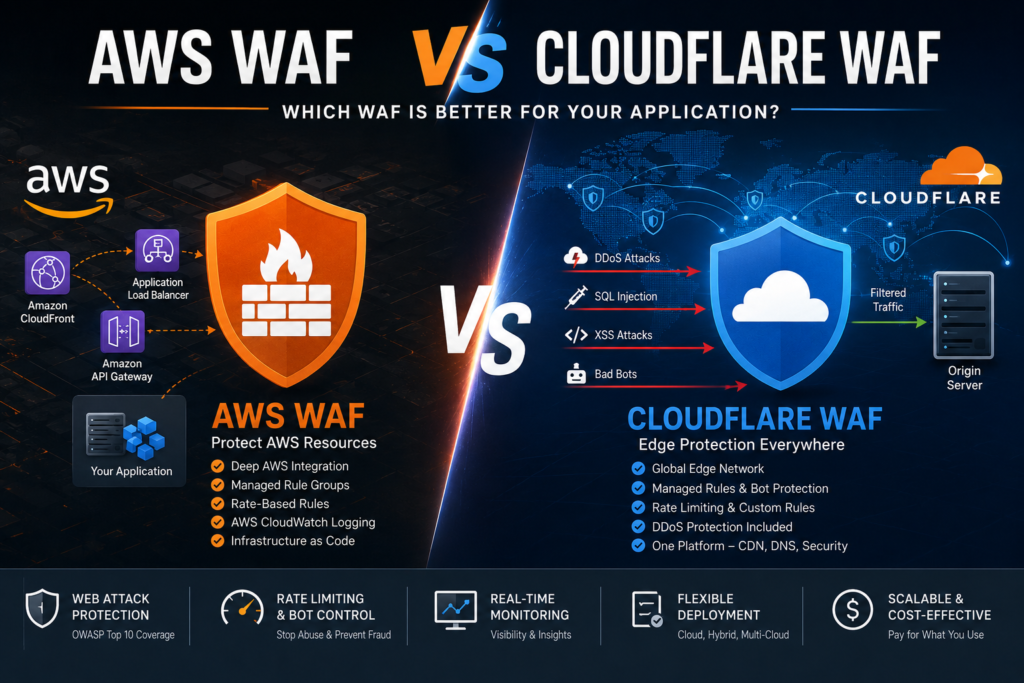
AWS WAF vs Cloudflare WAF

AWS WAF is the better choice when your applications already run heavily on AWS and you want tight integration with CloudFront, Application Load Balancer, API Gateway, and other AWS services. Cloudflare WAF is the stronger choice when you want an internet-facing security layer with Cloudflare’s global network, managed rules, bot controls, rate limiting, and simpler multi-provider deployment. The key difference is architecture. AWS WAF sits naturally inside an AWS-based stack, while Cloudflare WAF sits in front of your applications as part of Cloudflare’s edge platform. Both can defend against common web attacks such as SQL injection and cross-site scripting, but…

Read More
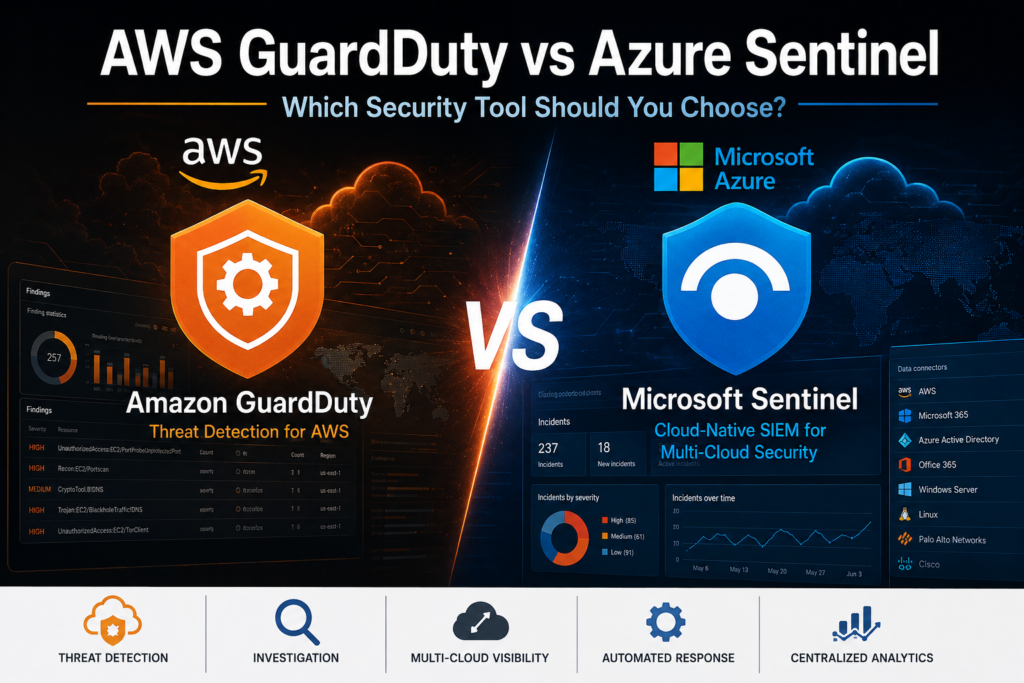
AWS GuardDuty vs Azure Sentinel

AWS GuardDuty vs Azure Sentinel is not really a choice between two equivalent products. Amazon GuardDuty is primarily a managed threat-detection service built around AWS telemetry, while Azure Sentinel—now called Microsoft Sentinel—is a cloud-native SIEM and security platform designed to collect, correlate, investigate, hunt, and automate response across multiple environments. For AWS-only workloads, GuardDuty is usually the better first security layer. For organizations needing centralized SIEM, cross-cloud visibility, threat hunting, and automated response, Microsoft Sentinel is the stronger choice. That distinction matters because GuardDuty can detect suspicious AWS activity without requiring you to build a traditional SIEM pipeline. Sentinel, by…

Read More
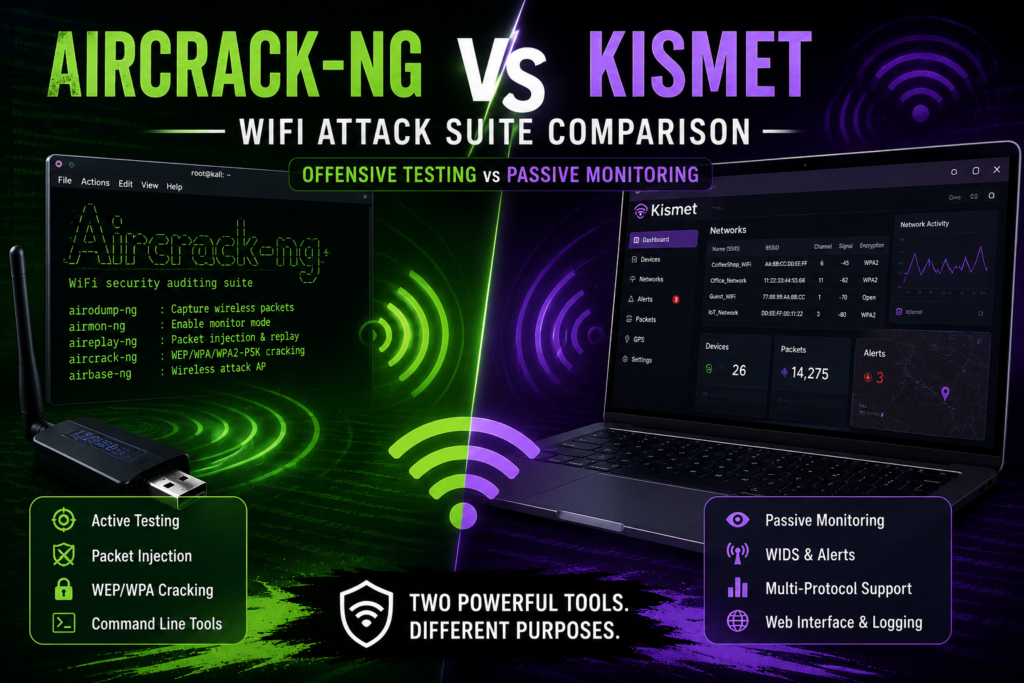
Aircrack-ng vs Kismet: WiFi Tools Compared

Aircrack-ng is the better choice when the goal is active Wi-Fi security testing, while Kismet is stronger for passive wireless discovery, monitoring, packet capture, and intrusion detection. They overlap in wireless reconnaissance, but they solve different problems. For a professional assessment, I would use Kismet for visibility and Aircrack-ng when controlled active testing is authorized. If you’re searching for Aircrack-ng vs Kismet WiFi attack suite, the key distinction is simple: Aircrack-ng is an offensive Wi-Fi auditing suite with tools for monitoring, frame injection, and legacy WEP/WPA-PSK testing, while Kismet is primarily a passive wireless sensor and WIDS platform. The best…

Read More
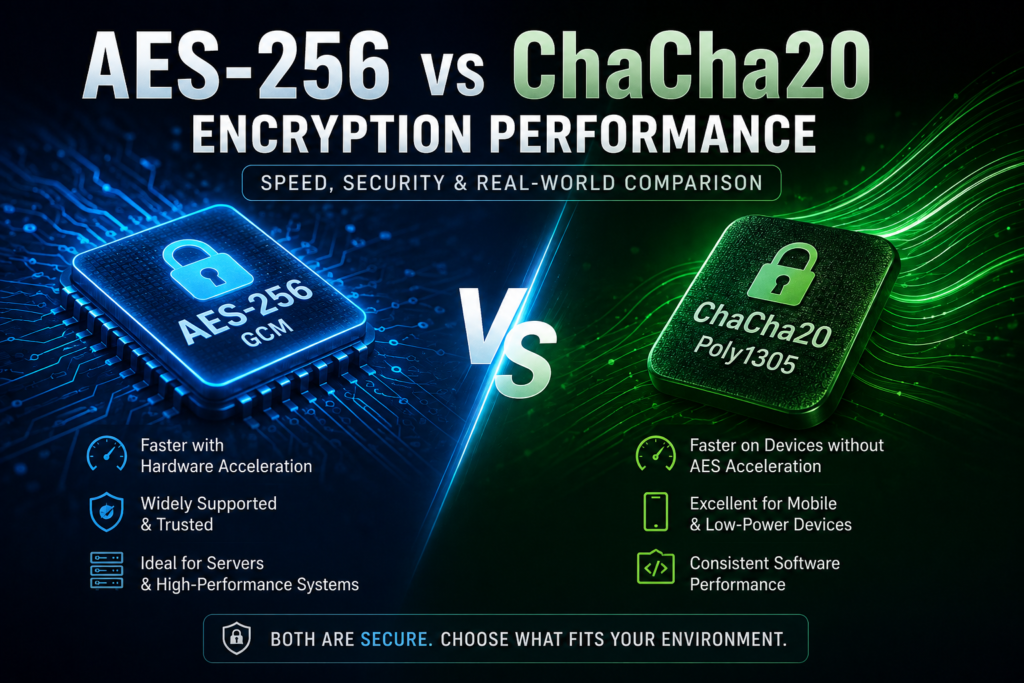
AES-256 vs ChaCha20 encryption performance

AES-256-GCM is usually faster than ChaCha20-Poly1305 on modern CPUs with AES hardware acceleration, while ChaCha20-Poly1305 often wins on devices without dedicated AES instructions. The difference can be dramatic: RFC 8439 reports ChaCha20-Poly1305 at 75.3 MB/s versus AES-128-GCM at 24.1 MB/s on an OMAP 4460, while AES-128-GCM reached 900 MB/s versus 500 MB/s for ChaCha20-Poly1305 on a Sandy Bridge Xeon with AES-NI. That leads to a practical rule: use AES-256-GCM when hardware acceleration is available and compatibility or ecosystem support matters; choose ChaCha20-Poly1305 when predictable software performance, especially on mobile or low-power CPUs, is more important. Both provide authenticated encryption, but…

Read More